The Problem
Most 'AI trading' demos are a single prompt and a static answer. The hard part was never the model — it's the backend: holding durable state across long-running multi-step workflows, coordinating concurrent agents, enforcing spend limits before money moves, and streaming everything to a UI in real time without losing consistency.
What OhMySwarm Does
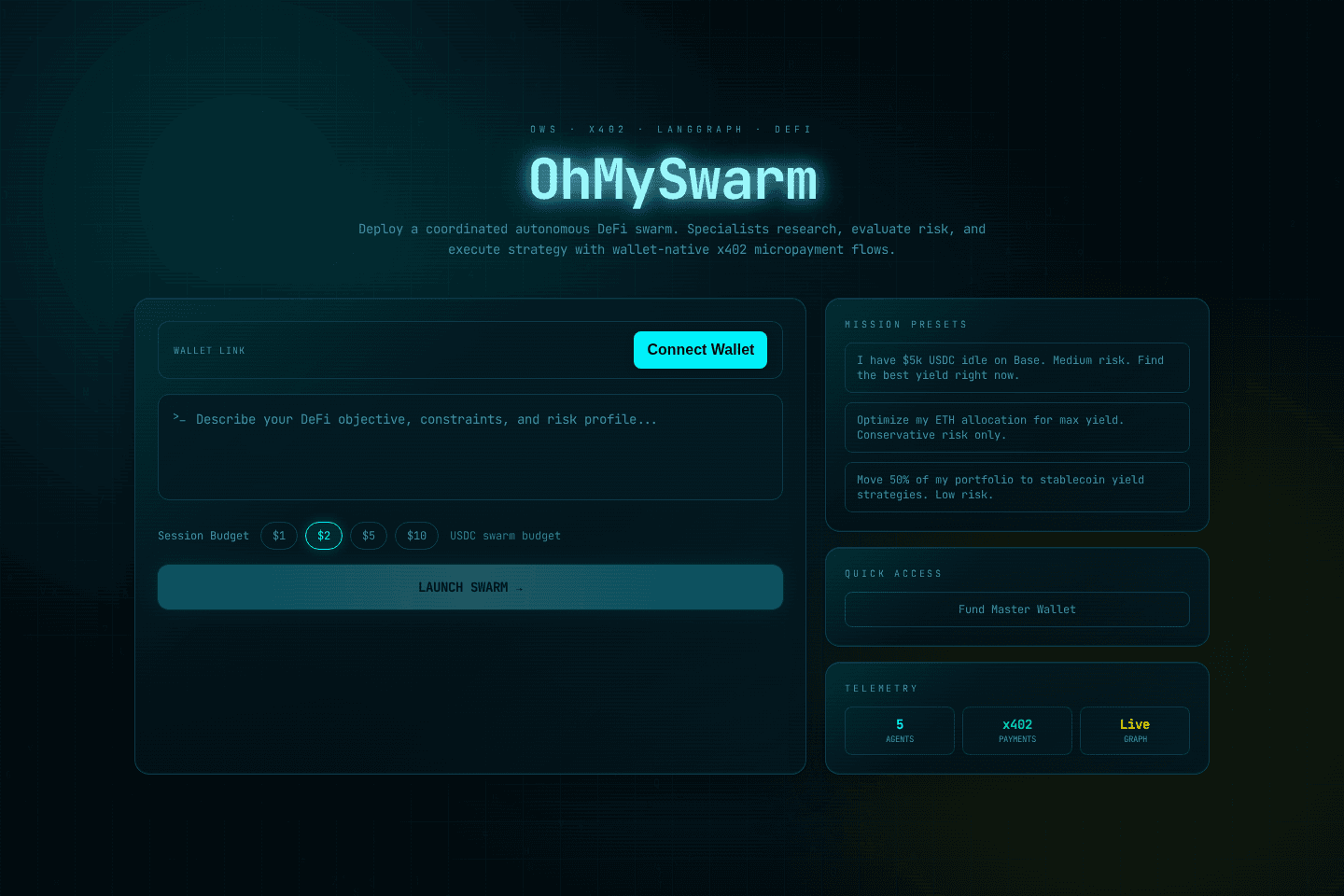
Takes a single user intent plus a budget and runs it through a structured multi-agent workflow: discover portfolio context, scan yield, analyze risk, plan execution routes, then execute — with explicit human approval checkpoints before anything critical. Real Sepolia USDC settlement and Aave V3 deposits in paid mode.
The Backend Architecture
- LangGraph ReAct orchestration with Postgres checkpointing — workflows survive restarts and resume from durable state.
- 9 specialist agents (portfolio-scout, yield-scanner, risk-analyst, route-planner, executor, and more) coordinated by a master graph.
- x402 micropayment rails: every sub-agent invocation is metered and billed in USDC from a session wallet, with deterministic spend accounting.
- Real-time event streaming over Socket.io to a split-screen operations console.
- Live data ingestion from Zerion (mainnet portfolios) and DefiLlama (pool APYs); gas and prices from chain RPC + CoinGecko — no hardcoded data.
- A 7-point deterministic policy engine gates execution before any onchain action.
Why It Matters
This is the part of agentic systems most demos skip: the stateful, transactional backend that makes autonomous execution actually safe. Durable orchestration, budget enforcement, live data, and real settlement — not a chatbot with a wallet.